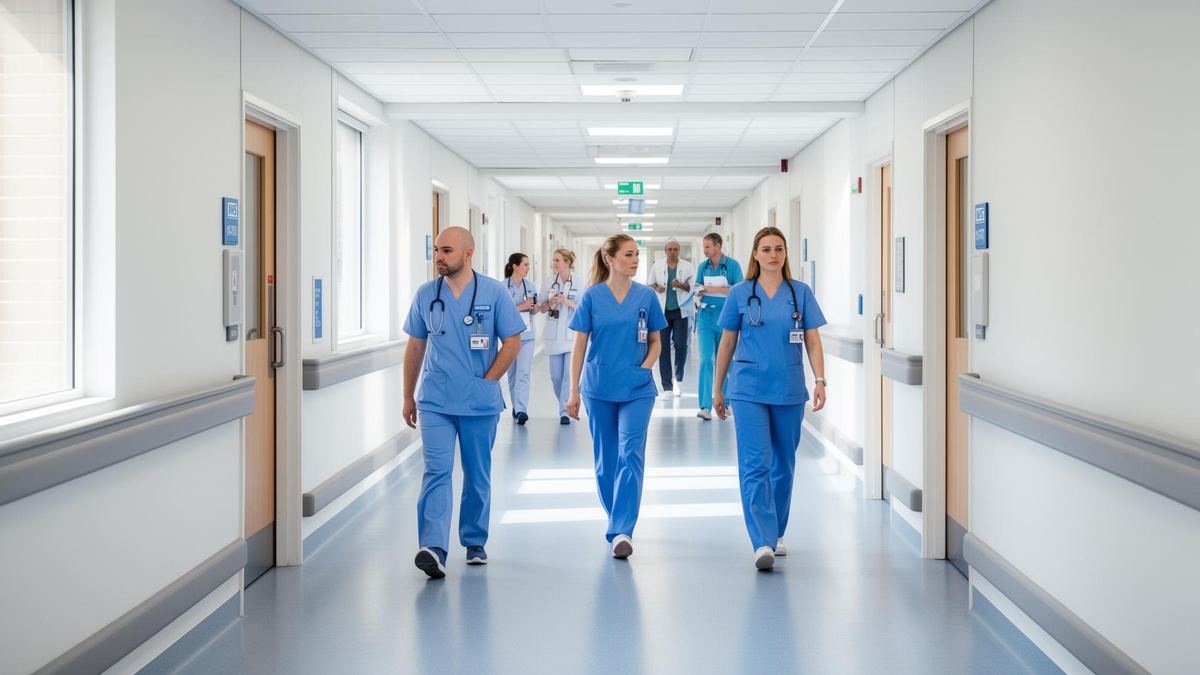
The NHS faces an unprecedented challenge. With 6.8 million patients on waiting lists and over 112,000 staff vacancies, traditional recruitment methods simply cannot keep pace.
The NHS staffing crisis has reached a critical moment where the systems designed for a different era no longer serve our modern healthcare needs.
The NHS staffing crisis has reached a critical moment where the systems designed for a different era no longer serve our modern healthcare needs.
Reframing the Recruitment Crisis
We often discuss the NHS staffing crisis as a numbers game – how many vacancies exist, how long positions remain unfilled. But this misses the deeper structural issues.
Traditional recruitment operates on assumptions that no longer hold true. It assumes healthcare professionals want permanent, full-time positions at single locations. It assumes geographic boundaries matter more than skills and availability.
Geographic Silos in a Connected World
Perhaps nothing illustrates our outdated thinking more clearly than geographic recruitment boundaries. Each Trust recruits independently, competing for local talent while ignoring qualified professionals just beyond arbitrary borders.
A Trust in Manchester might struggle for months to fill critical nursing positions while qualified nurses in Liverpool remain unaware of opportunities just 35 miles away. We've created artificial scarcity in the midst of potential abundance.
The Flexibility Gap
Traditional recruitment assumes binary choices: permanent or temporary, full-time or part-time, employed or agency. This black-and-white thinking ignores the spectrum of working arrangements modern professionals seek.
Many experienced nurses want to work flexibly around family commitments. Recently retired consultants might offer specialist sessions without returning to full-time practice. Our recruitment systems struggle to accommodate these nuanced preferences.
A New Vision for NHS Recruitment
Solving the NHS staffing crisis requires more than tweaking current systems – it demands fundamental reimagining. Future NHS recruitment must be instant, not interminable. Flexible, not fixed. Collaborative, not competitive. Digital, not paper-based.
Forward-thinking Trusts already demonstrate what's possible. They've implemented collaborative banks, embraced digital platforms, and streamlined compliance processes. Their successes prove that healthcare recruitment innovation is not only necessary but achievable.